
Chinese fuel cell industry speeds up "One liter, One drop"
The level of fuel cell, technology, core materials and supply chain management continues to improve, and the cost decreases further.
Hydrogen Blue Times' self-developed fuel cell system has recently passed the national strong inspection certification, with a rated power of 260 kilowatts. In recent years, driven by policies, the continuous acceleration of the layout of hydrogenation stations has provided an important support for the steady development of the fuel cell industry. The domestic fuel cell reactor and system are rapidly iterated and upgraded towards high power, and the technical level is rapidly improved. At the same time, the manufacturing cost of fuel cell products has dropped dramatically. The "one liter, one drop" development feature of the fuel cell industry is becoming more prominent. Based on this, the hydrogen fuel cell industry is about to enter the industrialization stage.
Industrial scale has accelerated
In October, the production and sales of fuel cell vehicles were 277 and 301, up 370 percent and 540 percent year-on-year, respectively, according to data released by the CAAM. In the first 10 months of this year, the production and sales of fuel cell vehicles were 2,700 and 2,400, respectively, up 180 percent and 150 percent year-on-year.
As one of the most important application areas of fuel cells, the substantial increase in the production and sales of hydrogen fuel cell vehicles means that the application scale of fuel cells will be further improved. Statistics show that by the end of 2021, 255 hydrogenation stations have been built in China, with a total of more than 8,000 fuel cell vehicles in demonstration operation.
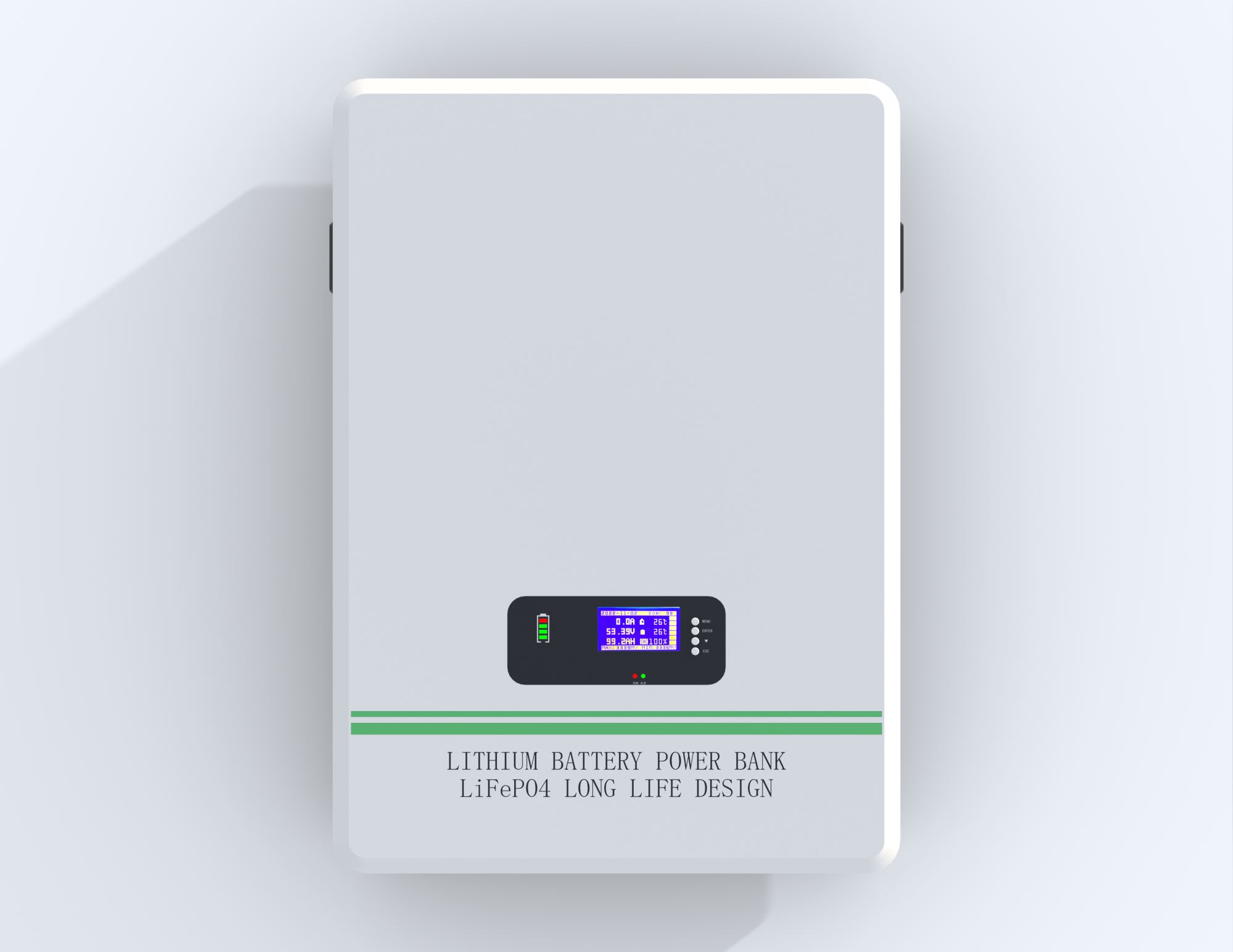
▲ Chujidian 48V100A
According to Jiang Kun, research and development manager at Wuhan Xiongtao Hydroxiong Fuel Cell Technology Co., LTD., fuel cell reactor and system costs have been significantly reduced from 2018 to now, and the number of hydrogenation stations in China is expected to grow exponentially by 2025 as the layout of the country's hydrogenation stations continues to accelerate, providing an important guarantee for the steady development of the fuel cell industry. Therefore, at present, the development of fuel cell industry is in the state of preparing for development.
Gu Pengzhou, manager of Engineering Department of Faurecia Zero Emission Division, believes that currently, China's fuel cell industry is more dominated by policies and subsidies. Different from foreign countries, which directly conduct fuel cell system research and development at the "vehicle regulation level", China is more seeking for delivery as soon as possible. In the long run, the whole fuel cell market of our country will be gradually in line with international standards, and finally the "vehicle regulation level".
"In addition to transportation applications, fuel cells can be used in a variety of applications, including fixed generation, which includes large distributed generation, small domestic cogeneration and backup power." Peng Suping, an academician of the Chinese Academy of Engineering, said that China's fuel cell industry is expected to embrace an important period of development opportunities in the next 10 to 20 years.
Continuous iteration of technical and management level
Liu Feng, director of reactor Development Department of Foshan Qingji Energy Technology Co., LTD., said that at the present stage under the guidance of national policies and the whole market, fuel cells are mainly oriented towards hydrogen energy heavy truck, fuel cell reactor and system forward to high power rapid iterative upgrade.
"Higher power reactors mean an increase in the number of single battery pieces, which puts forward higher requirements for the quality, accuracy and consistency of the products of enterprises." Liu Feng said that the technological progress of key components and raw materials such as catalysts and membranes is related to the improvement of reactor performance. In the future, fuel cell enterprises need more research and development in heat dissipation, membrane materials and other technologies.
It is noteworthy that during the process of accelerating industry, fuel cell technology, core materials, supply chain management, etc., are also being continuously upgraded in our country.
Taking GuoHydrogen Technology as an example, according to Meng Qijun, an engineer from its key materials division, Guohydrogen Technology has the capacity of more than 1,000 units of core material component systems for fuel cells, and has launched the assembly production line construction of 10,000 sets of catalysts and bipolar electric reactors. Meanwhile, Guohydrogen Technology is also pushing forward the construction of mid-production lines for carbon paper, film materials, air-cooled reactors and power generation reactors. "At present, Guohydrogen Technology has mastered the mass production process of key technologies such as catalyst, gas diffusion layer and bipolar plate, and its self-developed catalysts have reached the international advanced level after being identified by industry experts. Its performance characteristics are high activity, high durability and very low impurity content, which can meet the application needs of different scenarios."
Liu Feng said that in order to realize the localization of key components of fuel cell reactor and the improvement of supply chain as soon as possible, Qingji Energy has strengthened the quality audit and management of suppliers, and achieved the quality improvement of the whole process from product development quality, process assurance to excellent operation. In terms of project management, according to the time arrangement of product planning and development plan, all the advanced technologies are successively applied to fuel cell products to accelerate product iteration and continuously improve the technical content and added value of products.
The cost will be more competitive
The improvement of fuel cell technology will further drive the fuel cell industry to reduce costs.
Research data shows that the localization of hydrogen fuel cell systems has increased from 30 percent in 2017 to 60 percent in 2020. In 2021, the industry has achieved more technological breakthroughs: Hongji Innovation has officially rolled off the production line of 1 million film electrodes, Dongyue Future hydrogen production of 500,000 square meters of proton film automatic production line has been put into operation, and the annual output of Jiping new energy catalyst has reached 1,500 kilograms.
Based on this, fuel cell enterprises through technology to reduce costs significantly. According to Jiang Kun, Xiongtao Hydroxiong has adopted a series of cost reduction strategies, such as cost reduction of core components, design optimization, scale manufacturing, and step utilization, through product structure optimization, material optimization and process optimization. So far, the company's fuel cell products have simultaneously possessed the advantages of high power, high efficiency and low hydrogen consumption.
Zhejiang Securities has analyzed that, due to the large-scale development of fuel cells, the fuel cell system and electric reactors of our country will enter a rapid cost reduction range from 2021 to 2025. The compound average annual reduction of system costs is expected to be 16.9% and 5.3% in 2021-2025 and 2025-2035, respectively. It is expected that in 2025, the cost of domestic reactor and system will be reduced to 1227.9 yuan/kW and 2384.3 yuan/kW respectively. By 2035, the cost of domestic reactors and systems will be reduced to 603.9 yuan/kW and 1,388.9 yuan/kW, respectively. At the same time, the proportion of the reactor in the total cost of the system will gradually decrease.
Experts in the industry agree that the development of domestic hydrogen energy industry chain will be further standardized and systematized in the future with increasing policies and large-scale commercial applications. In the next 5-10 years, a number of leading enterprises will emerge in the hydrogen energy industry in key materials, core components, reactor systems, production line equipment, infrastructure and other fields, and hydrogen fuel cells will further reduce cost and increase efficiency. Usher in rapid development.
Disclaimer:
1. Some articles and pictures source: China Energy News Author: Zhong Rui;
2. Due to editing needs, there is no necessary connection between the text and the picture. It is only for readers' reference and does not represent the views of the platform, nor does it constitute investment advice or decision-making advice, nor does it provide material for any user transaction.
3. We reprint all articles, pictures, audio and video files and other materials copyright copyright belongs to the original owner, because the contents of the non-original articles and pictures can not be contacted with the copyright owner, if the original author or editor thinks that the work is not suitable for browsing online, or should not be used free of charge, or involved in copyright issues, please inform us in time, in order to quickly take appropriate measures, Avoid causing unnecessary economic losses or copyright disputes to both parties;
4. If this website infringes the intellectual property rights of media or individuals unintentionally, please contact us within 30 days after the publication of the article. We will delete the content as soon as possible, thank you.

使用微信掃一掃"});)