
AEMO said there was an "urgent need" for Australia to invest in long-term energy storage
Australia "urgently needs" investment in long-term energy storage and a new generation of resource and transmission infrastructure.
According to the Australian Energy Market Operator (AEMO), the country will gain a reliable power system as coal-fired power plants, historically Australia's main source of electricity generation, are retired.
AEMO (21 February) released an update to its 2022 Statement of Power Opportunities (ESOO) report. The report provides technical and market data to participants in the National Electricity Market (NEM), to which most of Australia's states and grids are connected.
The 2022 version was only released in August, but AEMO notes that even in the short time since then, the amount of power generated by the NEM has changed significantly.
The good news is that the reliability gaps predicted for electricity supply in South Australia this year and next, and in Victoria from 2024 to 2025, have been pushed back by a year or two.
This means that new resources such as natural gas, wind, solar PV and battery storage have been added or earmarked for installations that these states can call upon soon. The retirement dates of some gas plants have also been pushed back to keep power plants running.
AEMO said that since August, the 461MW/604MWh Battery Energy Storage System (BESS) project has met market operators' commitment criteria in terms of land, contract, planning, finance and construction, as well as 1,326MW of fresh air, all for connecting NEM. Battery storage duration gradually increases from 1 hour to 2 hours, and in some cases even to 4 hours, but there are hardly any resources of long duration, widely defined as about 8 hours or more.
Coal will still account for about 60% of NEM power generation until mid-2021, but most coal will be phased out by the early 2030s. At the same time, Australia has one of the highest levels of rooftop solar PV in the world, a growing share of utility-scale solar PV and wind power, a strong awareness of environmental and climate issues, and a strong business case for moving to non-fuel generation.
While statistics for 2022 are not yet available, annual battery storage installations in Australia exceeded the first gigawatt hour in 2021, including large BESS of more than 750MWh, according to market researcher Sunwiz, which released data in March last year.
picture
'Gas is not Australia's transition fuel'
Unlike in most other rich countries, the role of gas in generating electricity is fairly small. Gas turbines are often used around the world to balance supply gaps in variable renewable energy generation.
In other words, Australia has "made huge strides in decarbonising, certainly in Energy supply", Dr Bruce Shan of the Centre for Energy Policy think tank in Victoria recently told Energy-Storage.news.
"One of the striking things about Australia compared to other rich countries is the small role that gas plays in our electricity system. Although it is very important as a pricing fuel, we have a much smaller proportion of our electricity supply from gas than almost every other rich country."
However, as both the Mountain and AEMO reports point out, before considering the fuel's impact on climate and air quality, many coal fleets are old and inefficient, expensive to maintain and prone to breakdowns.
The academic said this provided the necessary conditions for a rapid transition to renewables in Australia's energy sector, and the idea of natural gas as a "transition fuel" was an established debate.
"Australian gas is expensive and we have an export market willing to pay far more than we need to. We have things few other rich countries have: wind, land and sunlight; Good wind, we are not close to the same degree as the Germans call 'dunkelflaute'."
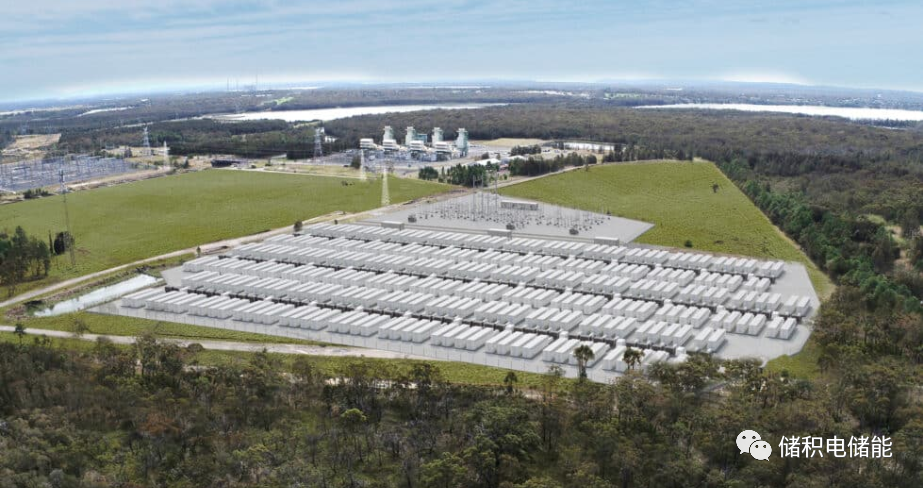
In the short term, new resources that will provide reliability to the grid include the 1.68GWh Waratah Superbattery being built under the impetus of the New South Wales Government.
The project is one of a number of new BESS assets awarded a System Integrity and Protection Program (SIPS) contract, which is essentially a mechanism for deploying batteries to increase long-distance network hosting capabilities between demand centers.
Daniel Westerman, CEO of AEMO, said NEM's proposed new projects total three times its current installed capacity, with 86 percent made up of three clean energy technologies: wind, solar PV and large BESS.
As coal comes offline, however, more diverse sources, including long-term storage, will be needed to close the reliability gap.
"Investments in robust power generation such as pumped storage, natural gas and long-life batteries are essential to complement our growing weather-dependent renewable generation to meet electricity demand," Westerman said.
Disclaimer:
1. Some articles and pictures come from the Internet;
2. Due to editing needs, there is no necessary connection between the text and the picture. It is only for readers' reference, and does not represent the views of the platform, nor does it constitute investment advice or decision-making advice, nor does it provide material for any user transaction.
3. All articles, pictures, audio and video files reproduced by us are copyrighted to the original owner. Because the contents of non-original articles and pictures cannot be contacted by the copyright owner. Avoid causing unnecessary economic losses or copyright disputes to both parties;
4. If this website infringes the intellectual property rights of media or individuals unintentionally, please contact us within 30 days after the publication of the article. We will delete the content as soon as possible, thank you.
Australia "urgently needs" investment in long-term energy storage and a new generation of resource and transmission infrastructure.
According to the Australian Energy Market Operator (AEMO), the country will gain a reliable power system as coal-fired power plants, historically Australia's main source of electricity generation, are retired.
AEMO (21 February) released an update to its 2022 Statement of Power Opportunities (ESOO) report. The report provides technical and market data to participants in the National Electricity Market (NEM), to which most of Australia's states and grids are connected.
The 2022 version was only released in August, but AEMO notes that even in the short time since then, the amount of power generated by the NEM has changed significantly.
The good news is that the reliability gaps predicted for electricity supply in South Australia this year and next, and in Victoria from 2024 to 2025, have been pushed back by a year or two.
This means that new resources such as natural gas, wind, solar PV and battery storage have been added or earmarked for installations that these states can call upon soon. The retirement dates of some gas plants have also been pushed back to keep power plants running.
AEMO said that since August, the 461MW/604MWh Battery Energy Storage System (BESS) project has met market operators' commitment criteria in terms of land, contract, planning, finance and construction, as well as 1,326MW of fresh air, all for connecting NEM. Battery storage duration gradually increases from 1 hour to 2 hours, and in some cases even to 4 hours, but there are hardly any resources of long duration, widely defined as about 8 hours or more.
Coal will still account for about 60% of NEM power generation until mid-2021, but most coal will be phased out by the early 2030s. At the same time, Australia has one of the highest levels of rooftop solar PV in the world, a growing share of utility-scale solar PV and wind power, a strong awareness of environmental and climate issues, and a strong business case for moving to non-fuel generation.
While statistics for 2022 are not yet available, annual battery storage installations in Australia exceeded the first gigawatt hour in 2021, including large BESS of more than 750MWh, according to market researcher Sunwiz, which released data in March last year.
picture
'Gas is not Australia's transition fuel'
Unlike in most other rich countries, the role of gas in generating electricity is fairly small. Gas turbines are often used around the world to balance supply gaps in variable renewable energy generation.
In other words, Australia has "made huge strides in decarbonising, certainly in Energy supply", Dr Bruce Shan of the Centre for Energy Policy think tank in Victoria recently told Energy-Storage.news.
"One of the striking things about Australia compared to other rich countries is the small role that gas plays in our electricity system. Although it is very important as a pricing fuel, we have a much smaller proportion of our electricity supply from gas than almost every other rich country."
However, as both the Mountain and AEMO reports point out, before considering the fuel's impact on climate and air quality, many coal fleets are old and inefficient, expensive to maintain and prone to breakdowns.
The academic said this provided the necessary conditions for a rapid transition to renewables in Australia's energy sector, and the idea of natural gas as a "transition fuel" was an established debate.
"Australian gas is expensive and we have an export market willing to pay far more than we need to. We have things few other rich countries have: wind, land and sunlight; Good wind, we are not close to the same degree as the Germans call 'dunkelflaute'."
In the short term, new resources that will provide reliability to the grid include the 1.68GWh Waratah Superbattery being built under the impetus of the New South Wales Government.
The project is one of a number of new BESS assets awarded a System Integrity and Protection Program (SIPS) contract, which is essentially a mechanism for deploying batteries to increase long-distance network hosting capabilities between demand centers.
Daniel Westerman, CEO of AEMO, said NEM's proposed new projects total three times its current installed capacity, with 86 percent made up of three clean energy technologies: wind, solar PV and large BESS.
As coal comes offline, however, more diverse sources, including long-term storage, will be needed to close the reliability gap.
"Investments in robust power generation such as pumped storage, natural gas and long-life batteries are essential to complement our growing weather-dependent renewable generation to meet electricity demand," Westerman said.
Disclaimer:
1. Some articles and pictures come from the Internet;
2. Due to editing needs, there is no necessary connection between the text and the picture. It is only for readers' reference, and does not represent the views of the platform, nor does it constitute investment advice or decision-making advice, nor does it provide material for any user transaction.
3. All articles, pictures, audio and video files reproduced by us are copyrighted to the original owner. Because the contents of non-original articles and pictures cannot be contacted by the copyright owner. Avoid causing unnecessary economic losses or copyright disputes to both parties;
4. If this website infringes the intellectual property rights of media or individuals unintentionally, please contact us within 30 days after the publication of the article. We will delete the content as soon as possible, thank you.

;)